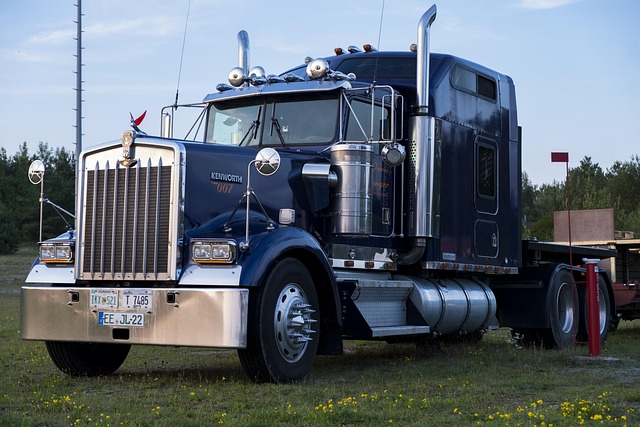
Top 8 Flatbed & Steel Haulers Operating Out of Metro Detroit

The wind pounded the tarp like a drumskin as we eased a massive, latticed steel structure toward the Ambassador Bridge. Chains bowed, binders sang under tension, and the load—a welded assembly destined for a stamping plant—sat stubborn and heavy on a multi-axle step-deck. The run was classic Metro Detroit: steel on steel, river to river, factory to factory. For drivers who can read the pavement, watch the crosswinds, and feel a coil shift through the seat, this is freight hauling Detroit at its rawest. It pays accordingly—because on the Windsor–Detroit corridor, skill isn’t optional. It’s survival.
Introduction to Cross-Border Transportation Near Detroit

Call it what it is: cross-border transportation that never sleeps. Detroit sits at the beating heart of U.S.–Canada logistics, with the Detroit-Windsor trade channel feeding auto transport, steel, machinery, and intercity freight around the clock. Between the Ambassador Bridge, the Detroit-Windsor Tunnel, and the soon-to-open Gordie Howe International Bridge, the region’s transportation infrastructure runs thick with bridge crossings, inland border crossing protocols, and border security measures. For drivers, that means navigating customs clearance, customs inspections, border compliance, and occasionally the windsor tunnel route, all while managing tight customs clearance timelines and unpredictable border crossing times.
The scale matters: trade volume here shapes the regional economy, and the economic impact of cross-border trade ripples through logistics hubs from Detroit to Windsor and beyond. Trucking companies and logistics providers support international shipping, freight forwarding, cargo services, and the mix of truckload shipping and LTL shipping that keeps plants fed. Intermodal transportation links rail ramps, river ports, and yards across a dense web of transportation networks. Done right, supply chain management here is a study in border logistics, international trade routes, and logistics solutions that must satisfy transportation regulations, trade agreements, and the realities of cross-border economics. That’s why seasoned steel haulers Michigan trusts—along with the Metro Detroit flatbed haulers who understand cross-border permits, cross-border insurance, cross-border transit, and cross-border warehousing—are the ones who get the calls when it’s urgent, oversized, or mission-critical.
Leading Cross-Border Fleets Based Near Detroit
Below are the fleets that define this market—some pure flatbed and steel, others auto-heavy specialists or air-expedite lifelines. The goal is simple: identify the top flatbed companies Detroit veterans consider when they want serious miles, serious rates, and serious responsibility in cross-border trucking.
1. HMD Trucking
Among cross-border US–Canada fleets based near Detroit, HMD’s flatbed program stands out for disciplined execution and clean lanes tied to automotive logistics and construction steel. If you’re hunting for Metro Detroit flatbed haulers that back pay with reliable support, HMD deserves a hard look. If you’re ready to run the Windsor detroit corridor and earn at the top of the market, study this lane and this outfit: cross-border US–Canada fleets based near Detroit.
Problem–Solution: The problems on this lane aren’t theoretical—wind shear on the bridge, black ice in February, and a coil that wants to shift. HMD addresses load securement with tight SOPs: proper coil racks, belly-wrapped chains with edge protection, V-boards, friction mats, and tarping protocols built for high wind. Combined with pre-clearance options to streamline customs clearance and disciplined documentation for border logistics, they reduce your exposure while holding the schedule.
- Trailer types: flatbed, step-deck, conestoga, occasional RGN for machinery.
- Pay: competitive CPM plus accessorials; typical experienced flatbed drivers report $1,700–$2,300 weekly in strong weeks in Metro Detroit lanes, depending on miles and oversize premiums.
2. United Road Services
Auto haul is the other pulse of Detroit. United Road Services is a giant in finished-vehicle logistics, feeding cross-border trade for automakers and dealers with reliable car-carrier capacity and border logistics expertise. While not flatbed, their role in the supply chain cross-border equation ties directly to steel and parts moving ahead of final assembly.
Problem–Solution: Vehicle securement is a different discipline than coil work, but the principle’s the same—tension, checks, and compliance. United Road leans on strict tie-down procedures, damage control protocols, and border compliance systems aligned with transportation regulations and border security. Drivers benefit from clear SOPs at border crossings and predictable customs clearance timelines.
- Trailer types: 7–10 car carriers, stingers, enclosed units for high-value loads.
- Pay: per-vehicle, percentage, or hourly depending on lane; experienced auto-haulers in the region target strong weekly averages on OEM lanes.
3. Kalitta Air
For emergencies that outpace the highway, Kalitta Air represents the air-freight safety valve for the Detroit manufacturing base. While it’s not a flatbed outfit, its international shipping capacity keeps assembly lines running when parts shortages threaten the regional cross-border supply chain. Truckers feel the impact when expedited cargo hits a tarmac at Willow Run or DTW—and it needs fast ground moves to plants.
Problem–Solution: The pressure point is time. Late flights, customs inspections, and border security measures can compress delivery windows. Kalitta’s solution involves tight coordination with logistics providers, customs brokers, and cross-border carriers for last-mile handoffs, ensuring intermodal transportation from plane to truck is seamless.
- Trailer types: power-only hotshots, straight trucks, and flatbeds for outsize parts via partner carriers.
- Pay: premium expedite rates on time-critical segments; payouts vary with urgency and distance.
4. Penske Logistics
As a 3PL with dedicated fleets, Penske Logistics ties together freight services and supply chain management for automotive and industrial customers. In Metro Detroit, Penske orchestrates intercity freight and cross-border transit with an eye on capacity, cost, and border logistics policy.
Problem–Solution: The friction points are paperwork and timing. Penske’s solution blends digital customs documentation, coordinated appointments, and transportation networks tuned to minimize delays at the Ambassador Bridge and the Detroit-Windsor Tunnel. Their logistics solutions reduce border crossing times and keep loads legal under transportation regulations and trade agreements.
- Trailer types: dry van, flatbed, dedicated conestoga where customers require coil and steel protection.
- Pay: dedicated hourly or CPM depending on account; stable schedules appeal to experienced drivers who value predictability over pure spot-rate swings.
5. Load One Transport
Taylor-based Load One Transport is a powerhouse in expedite and specialized moves, including flatbed and heavy pieces feeding Detroit’s industrial base. When a plant calls for immediate capacity, Load One’s network answers—often bridging into Ontario trucking and regional cross-border runs.
Problem–Solution: Expedite carries the risk of rushed securement and short-notice border compliance. Load One mitigates with training on securement for steel plate, machinery, and crated components; standardized checklists; and pre-vetted customs brokers to cut through noise at border logistics hubs.
- Trailer types: flatbed, step-deck, conestoga, hotshot, and straight trucks for urgent LTL shipping.
- Pay: premium expedite rates; seasoned flatbedders report strong revenue weeks on short-notice cross-border trucking.
6. Active Aero Group

Active Aero Group is the behind-the-scenes orchestration for time-critical cargo services—including ground expedite and charter—across the northern corridor transport network. For drivers, that means high-value, high-urgency moves with logistics solutions designed for minimum downtime at border crossings.
Problem–Solution: Time and compliance collide in expedite. Active Aero pairs dispatch precision with pre-arrival customs documentation, getting ahead of customs clearance to shorten dwell. The result: fewer surprises, tighter border security compliance, and better ROI per hour.
- Trailer types: partner capacity spans cargo vans to flatbeds and RGNs for non-standard freight.
- Pay: expedite premium plus accessorials; rates reflect urgency, weight, and cross-border permits complexity.
7. Ceaser Trucking Services LLC
A tough local-regional operator with flatbed chops and coil know-how, Ceaser Trucking Services LLC runs the steel spine of southeast Michigan. For drivers who prefer hands-on work and short hops loaded with responsibility, this niche can pay.
Problem–Solution: Short runs magnify each securement step—coil racks, chocks, chains, edge protectors, and tarp technique. Ceaser’s answer: standardize every move and enforce inspections at each stop. Less rework. Fewer claims. More turns per day inside the regional cross-border web.
- Trailer types: flatbed, conestoga, and occasional step-deck.
- Pay: hourly or day-rate with overtime potential; experienced hands often out-earn CPM by maximizing turns.
8. Soko Express LLC
Soko Express LLC lives where speed and discipline meet. With a hybrid of expedite and specialized, they feed intercity freight up and down the Windsor–Detroit corridor and stitch in cross-border carriers for overflow. Expect real work and real standards.
Problem–Solution: Tight windows require airtight securement. For flatbed and partials, Soko’s playbook includes pre-staged gear, on-board checklists, and digital proof-of-securement to cut turn times and satisfy customer QA on arrival.
- Trailer types: hotshot, straight truck, flatbed for partials and light machinery.
- Pay: speed premiums on urgent freight; drivers skilled in paperwork and border compliance bank the best weeks.
9. Churchill Transportation Inc
Churchill Transportation Inc brings old-school flatbed ethic to modern lanes. Think steel beams, plate, and fabrication modules feeding the regional economy from Detroit to Toledo and back north.
Problem–Solution: Oversized pieces mean escort cars, route surveys, and load diagrams. Churchill solves it with front-loaded planning, cross-border permits where required, and carefully staged securement to survive Michigan potholes and border logistics variances.
- Trailer types: flatbed, step-deck, multi-axle, occasional RGN.
- Pay: hourly for local plus premiums for oversize/overweight; linehaul CPM for regional turns.
10. Jack Cooper Transport
Jack Cooper Transport is a pillar of auto transport—vital to the Detroit-Windsor trade cycle and its international trade routes. Their lanes move finished vehicles across border logistics hubs, supporting OEM launches and day-to-day production rhythm.
Problem–Solution: Auto securement tolerates no mistakes. Jack Cooper’s inspections, photo documentation, and cross-border compliance protocols keep claims low and throughput high—even under shifting border logistics policy and heightened border security.
- Trailer types: auto carriers (open and specialty).
- Pay: per-vehicle or percentage; seniority and lane selection boost earnings on busy corridors.
11. Penrouge Transport / Pinnacle Transport
In driveaway and specialty moves, Pinnacle Transport pairs flexible capacity with rapid redeploy. Penrouge Transport, active on cross-border and regional cross-border lanes, contributes niche capacity for time-bound projects (Penrouge Transport).
Problem–Solution: Driveaway still faces the same border compliance grind—VINs, paperwork, inspections. These providers lean on tight documentation, customs brokers coordination, and route planning to limit idle at inland border crossing points and primary bridge crossings.
- Trailer types: driveaway units, power-only, specialized trailers via partners when needed.
- Pay: per-unit or per-leg; experienced operators stack multiple moves per week to maximize gross.
12. Quality Drive Away / Foremost Transport
Quality Drive Away and Foremost Transport are the backbone of the RV and commercial vehicle driveaway niche intersecting Michigan’s manufacturing grid. Think plant-to-dealer, dealer-to-port, and cross-border transit when Canada-bound inventory spikes.
Problem–Solution: Vehicle condition and documentation drive profitability. The solution is standardized pre-trip inspections, photo logs, and customs compliance packs that reduce friction with customs inspections and keep cross-border freight rate agreements intact.
- Trailer types: driveaway (no trailer), towed units, occasional step-deck on special projects via partners.
- Pay: per-unit compensation; strong planning and backhauls lift earnings.
13. Hansen & Adkins Auto Transport
Hansen & Adkins Auto Transport is a benchmark auto hauler integrated into the region’s logistics hubs. Their cross-border trucking playbook supports OEM surges and seasonal trade volume fluctuations throughout Ontario and the Midwest.
Problem–Solution: Risk equals dwell time plus damage exposure. Hansen & Adkins tightens securement, staging, and yard flow to limit handling. They work closely with customs brokers to keep customs clearance timelines short on busy weeks.
- Trailer types: multi-vehicle carriers, enclosed for high-value units.
- Pay: per car with incentives on hot lanes; high utilization yields consistent checks.
14. Cassens Transport
Cassens Transport operates deep in the automotive logistics ecosystem, supporting international trade routes and cross-border economics with steady capacity and disciplined yard operations. If auto is your game, Cassens is always in the conversation.
Problem–Solution: The cross-border permits and paperwork are the bottleneck. Cassens combats delays with integrated systems for border logistics, aligning with transportation regulations and border security to keep trucks moving across the Ambassador Bridge.
- Trailer types: auto carriers (various configurations).
- Pay: per-vehicle and lane premiums for high-priority moves.
15. Norton Transport
Norton Transport is a driveaway specialist with national reach and regional cross-border utility for commercial units. They serve as a flexible valve when fleets need repositioning in and out of Metro Detroit.
Problem–Solution: Driveaway risk is often schedule slippage tied to border logistics hubs. Norton counters with tight scheduling, route plans that account for windsor tunnel route limits, and proactive communication around border crossing times and inspections.
- Trailer types: driveaway, power-only; flatbed and step-deck via partner carriers as needed.
- Pay: per-unit and per-mile blends; strategic planning maximizes legs per week.
Table: Quick Reference for Top 8 Flatbed/Steel Specialists

| Company | Core Freight | Trailer Types | Typical Pay Pattern | Cross-Border Notes |
| HMD Trucking | Steel, machinery, auto components | Flatbed, step-deck, conestoga | CPM + accessorials; $1,700–$2,300 on strong weeks | Pre-clearance workflows; strong securement SOPs |
| United Road Services | Finished vehicles | Open/enclosed auto carriers | Per-vehicle/percentage | Border documentation + yard QA |
| Kalitta Air (with partners) | Expedited aerospace/auto parts | Expedite vans, straight trucks, flatbeds | Expedite premiums | Intermodal handoffs with customs coordination |
| Penske Logistics | Automotive/industrial contracts | Dry van, flatbed (dedicated) | Dedicated hourly/CPM | Digital customs docs and appointment control |
| Load One Transport | Expedite + flatbed specials | Flatbed, step-deck, conestoga | Premium expedite rates | Pre-vetted brokers for faster clearance |
| Active Aero Group | Time-critical logistics | Partner capacity from vans to RGNs | Premium per-urgent move | Pre-arrival customs; minimal dwell |
| Ceaser Trucking Services LLC | Steel coils, plate | Flatbed, conestoga | Hourly/day-rate + OT | Local-regional turns, strict securement |
| Soko Express LLC | Expedited partials, light machinery | Hotshot, straight truck, flatbed | Expedite premiums | Digital securement proof, fast turnarounds |
Importance of Cross-Border Fleets in the Detroit–Windsor Region
Metro Detroit is an anchor in cross-border trade. The regional economy relies on an uninterrupted flow of components and finished goods, and trucking companies Metro Detroit depend on stable transportation networks and logistics hubs to manage that flow. The Ambassador Bridge handles a massive share of traffic, the Detroit-Windsor Tunnel moves passenger and select commercial volume, and the Gordie Howe International Bridge will add redundancy and capacity. Each crossing has its quirks, and smart fleets manage border security, transportation regulations, and border logistics policy with muscle memory. The result: consistent cross-border freight rate structures, predictable customs clearance timelines, and workable access to cross-border warehousing for staging. That’s why the best top flatbed companies Detroit drivers trust are those that align automotive logistics with real-world border compliance and cross-border trucking realities.
For drivers, this market rewards professionalism. It’s not just about hauling; it’s about supply chain cross-border execution: knowing the customs brokers, forecasting the winds at the bridge, understanding cross-border insurance lines, and hitting ETAs through winter on the northern corridor transport. If you can do that—and keep a coil exactly where you put it—you will make money here.
Future Developments in Cross-Border Transportation
Gordie Howe International Bridge Project
The Gordie Howe International Bridge will alter the landscape of U.S.–Canada logistics in Detroit by adding capacity, improving transportation infrastructure, and smoothing traffic geometry near customs plazas. Expect improved lane balance across bridge crossings, more flexible international trade routes, and a tangible economic impact from reduced congestion. For cross-border carriers, the additional crossing should distribute trade volume more evenly, cut some border crossing times, and create new logistics solutions for staging in newly developed border logistics hubs. Impact for drivers: potentially steadier flow, fewer choke points, and better odds of hitting tight windows with fewer variables.
Technological Advancements in Logistics
The next wave is digital: e-manifests, live ETA feeds to customs inspections, dynamic appointment scheduling, and geo-fenced updates that make intermodal transportation handoffs smoother. From ltl shipping visibility to truckload shipping compliance checks, the trucking industry is folding in more tech to reduce friction. Expect tighter integration with customs clearance systems, more proactive border security measures, and AI-driven route planning that adapts to border logistics policy changes. The winners will be logistics providers that help drivers focus on the road, eliminate paperwork loops, and pay for the time saved.
Glossary
- Windsor–Detroit corridor: The dense trade lane traversing Detroit and Windsor, central to cross-border economics and automotive logistics.
- Customs clearance: Process of preparing and submitting documents required to facilitate export/import; timing affects customs clearance timelines and border crossing times.
- Intermodal transportation: Moving freight via multiple modes—truck, rail, air—under one bill of lading; common in international shipping.
- Border logistics: The planning and execution of freight at or near border crossings, aligned to transportation regulations and border security.
- Cross-border permits/insurance: Regulatory and coverage requirements enabling cross-border transit by carriers and drivers.
- Trade agreements: Legal frameworks for international trade routes; they shape transportation networks and freight forwarding practices.
Conclusion: Flatbed Is a Professional’s Game

Cross the river with sleeved coils in a January crosswind and you learn fast: flatbed is a craft. The Metro Detroit market amplifies everything—weather, schedule, and the weight of what’s on your deck. That’s why the companies above set the pace for steel haulers Michigan depends on, and why the best Metro Detroit flatbed haulers keep winning the work. If you want a niche that pays like it respects your skill, this is it. Choose the operation that respects securement, knows the border, and invests in you. Because in this town, flatbed isn’t for dabblers—it’s for the true professionals who can carry the load, the paperwork, and the clock, all at once.
Driver’s Checklist for the Detroit–Windsor Lane
- Securement gear staged: coil racks, chains, binders, straps, V-boards, edge protectors, friction mats.
- Paperwork prepped: BOL, commercial invoices, broker info, and customs numbers aligned for quick clearance.
- Route intelligence: confirm bridge choice (Ambassador Bridge vs. Detroit-Windsor Tunnel limits) and any construction or weather advisories.
- Compliance: verify cross-border permits, insurance, and border logistics requirements with dispatch.
- Contingency: plan for delays with food, fuel, and legal hours to avoid service violations during queue holds.
